
Cloud Native Buildpacks Graduates: A Dockerfile Alternative Platform Teams Should Evaluate
Cloud Native Buildpacks graduated from CNCF in 2026. Here is how buildpacks compare with Dockerfiles for teams standardizing image builds.
Read more →Container engineering resources covering Docker, Kubernetes, Helm, service mesh, and production container runtime operations for platform engineers.
Cloud Native Buildpacks graduated from CNCF in 2026. Here is how buildpacks compare with Dockerfiles for teams standardizing image builds.
Read more →
Kubeflow graduated from CNCF in 2026. Here is what the milestone confirms, and what a production MLOps platform on Kubernetes still demands from your team.
Read more →
Kubernetes 1.34 goes end of life on October 27, 2026. Two minor-version hops stand between you and a supported release — here's the sequence, the gates, and …
Read more →
v1.37 is scheduled for August 26, 2026. The deprecations in the official sneak peek are what will break clusters — here's what is confirmed, what is still …
Read more →
Kubernetes v1.36 ships User Namespaces, Mutating Admission Policies, and tighter security defaults. A practical upgrade guide for platform teams.
Read more →
Kubernetes DRA graduated to GA in v1.34, replacing legacy device plugins. Here's what the DRA + KAI Scheduler stack means for platform teams running GPU …
Read more →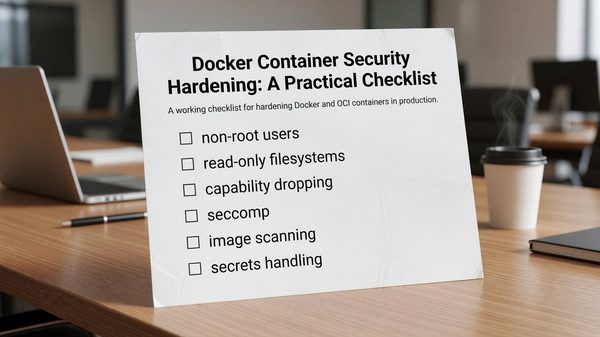
A working checklist for hardening Docker and OCI containers in production — non-root users, read-only filesystems, capability dropping, seccomp, image scanning, …
Read more →
The container runtime under your Kubernetes cluster matters less than it used to, but the choice still affects performance, security posture, and operational …
Read more →
A platform comparison of Amazon EKS, Azure AKS, and Google GKE — control-plane cost, node-pool flexibility, GPU support, and upgrade mechanics.
Read more →
RBAC is the primary access control mechanism in Kubernetes. Getting it right is the difference between a cluster that scales securely and one that quietly …
Read more →
Operators automate day-two operations for stateful, complex Kubernetes workloads, but they're overkill for most apps. How to know which side you're on.
Read more →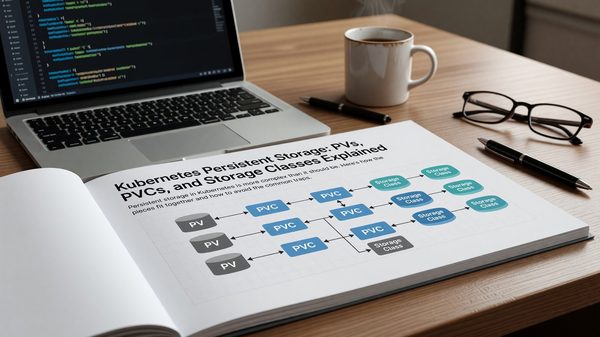
Persistent storage in Kubernetes is more complex than it should be. Here's how the pieces fit together and how to avoid the common traps.
Read more →
The CNI plugin you pick shapes performance, security policy capabilities, and observability for the life of your cluster. Here's how the major options compare.
Read more →
Container image scanning is non-negotiable. Trivy is the most popular open-source scanner. Here's how to integrate it into CI without drowning in noise.
Read more →
Namespaces are Kubernetes's primary multi-tenancy mechanism — and the most misused. Here's how to design a namespace strategy that doesn't fall apart at scale.
Read more →
Picking a container registry seems like a small decision until pull rate limits, IAM integration, or geographic latency starts hurting you.
Read more →
Helm charts age into either useful abstractions or unmaintainable template soup. Here's the structure that keeps them on the right side of that line.
Read more →
Resource requests and limits drive scheduling, autoscaling, and stability. Getting them wrong wastes money or destroys reliability.
Read more →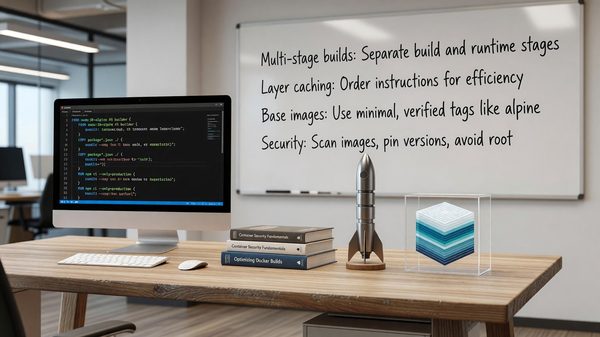
Multi-stage builds, layer caching, base image selection, and the security practices that separate hobby Dockerfiles from production-ready container images.
Read more →